Line-card matching
Separate rigging hardware, general hardware and fasteners before the quote moves forward. This reduces back-and-forth on part families and keeps technical questions attached to the right category.
Service model
Crosby support is designed for buyers who need an answer that fits an industrial workflow rather than a consumer cart. The service path starts with the part family, moves through application context and ends with a practical next step for quoting, documentation or dealer routing.
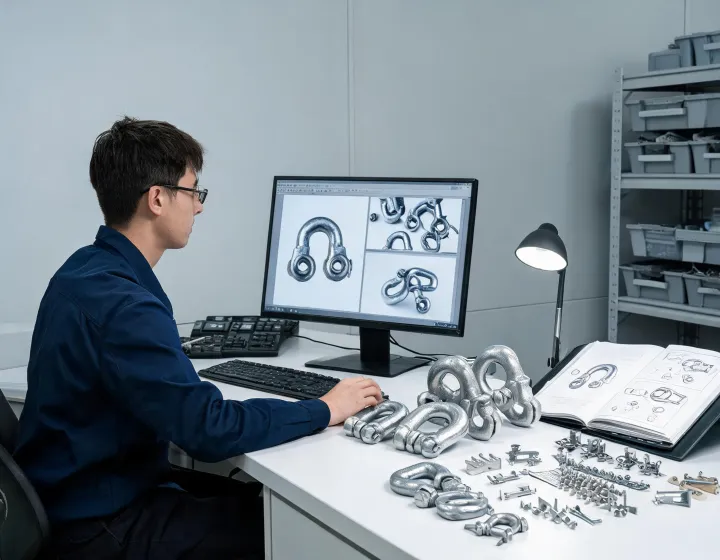
That approach matters when a request contains mixed lines. A purchasing desk may need screw pin shackles for a lift plan, turnbuckles for a maintenance repair, cabinet pulls for a fixture package and bulk fasteners for a production cell. Crosby separates those needs clearly so the first reply can be useful.
Service areas
Separate rigging hardware, general hardware and fasteners before the quote moves forward. This reduces back-and-forth on part families and keeps technical questions attached to the right category.
Document the work setting, replacement driver, quantity signal and handling constraints in a compact format that sales, operations and maintenance teams can read quickly.
Point requests toward distributor support, direct commercial discussion or recurring MRO planning based on urgency and product mix.
Help teams compare naming, size references and family descriptions when legacy records do not match a current catalog path.
Embedded FAQ
The FAQ is intentionally short. Most industrial buyers already know the job context; they need a clean way to state it and a responsive path for the next commercial step.
Side-by-side comparison
Mixed shorthand, missing application notes, unclear quantities and no separation between lifting hardware, cabinet hardware and fasteners. This slows routing and forces the first reply to ask basic classification questions.
Product families are grouped, the work environment is described and the expected next step is clear. The buyer does not need a long narrative; a structured, compact note is enough for faster handling.
Inline form
Use this form for line-card matching, catalog clarification, distributor routing and recurring MRO sourcing. The shorter the product grouping, the faster the first useful reply can be prepared.